
Washtenaw County Arrest Records and Court Charges
An arrest record is the law enforcement account of an arrest. It names the person arrested, the arresting agency, the date and place, and the offense the officer suspected at the time. In Washtenaw County, that agency is often the Sheriff's Office or a local police department. Booking follows the arrest. Staff record the person's identity, take fingerprints, and log the suspected offenses. That booking data sits on the custody side of the system, held by the jail rather than the court. An arrest, by itself, is only an accusation. It does not prove anyone broke the law.
The court charge record is different. After an arrest, the Washtenaw County Prosecuting Attorney reviews the police report and decides what charges to file, if any. Those charges, once filed with the court, open a case that the clerk tracks from start to finish. The booking and jail side, including bond and custody status, sits with Washtenaw County inmate records. The full case file, with pleas, hearings, and the final outcome, lives with the criminal court record. Arrest records and charge records overlap, but they answer different questions.
How to Find Washtenaw County Arrest Records
Charges filed after an arrest show up in the court case record, so the court search is the main tool. Washtenaw County uses the statewide MiCOURT Case Search along with the Trial Court's own name search page. Neither one posts mugshots or a jail blotter. What they show is the case: the charges, the events, and the current status. Booking and custody detail, including bond and charge information held by the jail, comes from a separate phone line rather than a website.
- Open the statewide MiCOURT Case Search or the county Trial Court name search.
- Search by the defendant's name, or enter the case number if you have it.
- Open the matching case to see the list of charges filed after the arrest.
- Read each charge for its statute citation, its level, and its current status.
For the arrest and booking side, the county does not post an online jail roster. Bond information, charge information, and visitation details are given by phone. The Sheriff's Office corrections line at 734-973-4770 answers those custody questions. The court portals, by contrast, track the charges once the prosecutor files them.
The Sheriff's Office handles arrests and jail booking across the county. The Washtenaw County Sheriff's Office page is the starting point for its divisions and contact lines.
Because the arrest happens on the sheriff or police side, that office is where booking detail begins before any charge reaches the court.
Washtenaw County Sheriff Arrest Records
Beyond the court case, the Sheriff's Office keeps its own arrest and incident reports. These law enforcement records are requested from the Sheriff's Office, not the court clerk. The records bureau handles report copies, and a Freedom of Information Act request covers documents that are not released over the counter. Michigan's FOIA sets the framework for those requests.
Report copies start with a written request to the sheriff. The Sheriff's Office records request page explains how to ask for an incident or accident report.
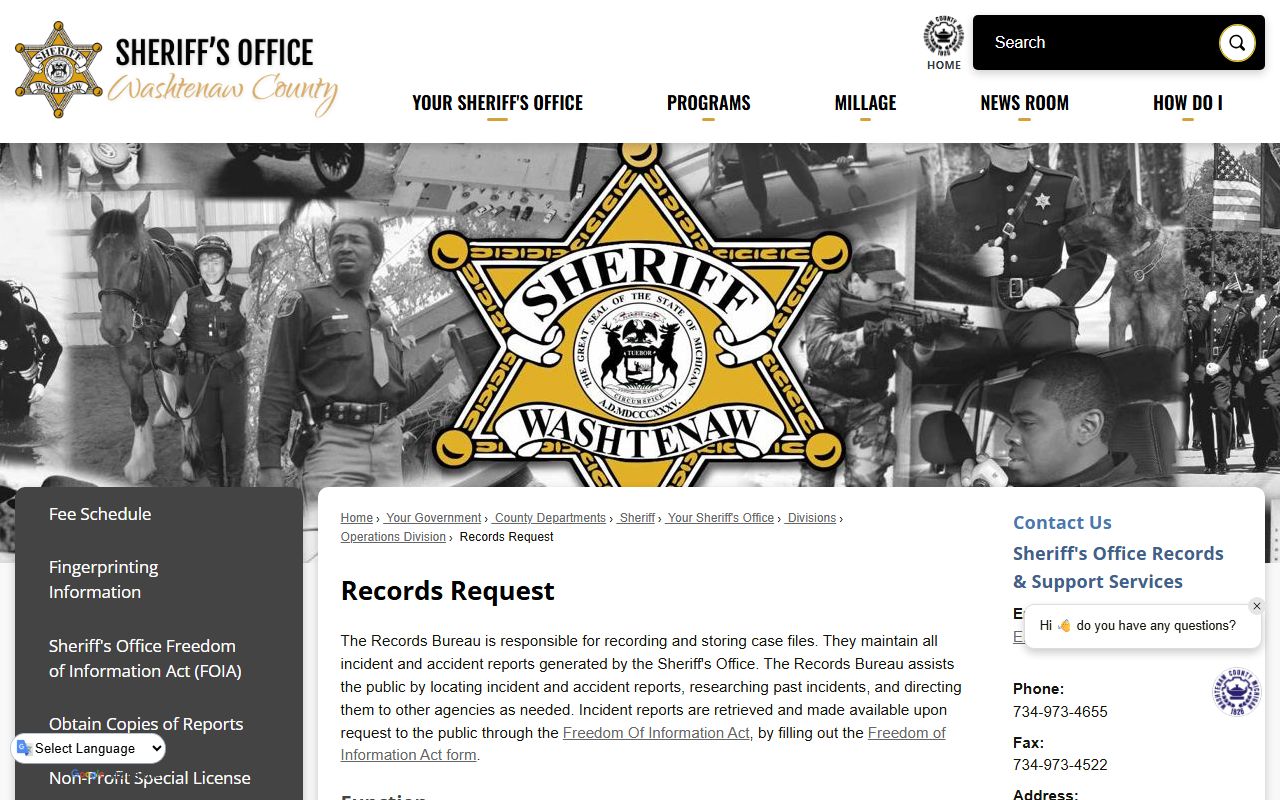
An arrest or incident report from the sheriff can add detail that the court case summary leaves out. When a record is not available through the standard request, the FOIA process is the next step. It applies to law enforcement documents held by the Sheriff's Office, subject to the exemptions Michigan law allows.
The county posts a dedicated form for these requests. The Sheriff's Office FOIA page is where public records requests to the sheriff are filed.
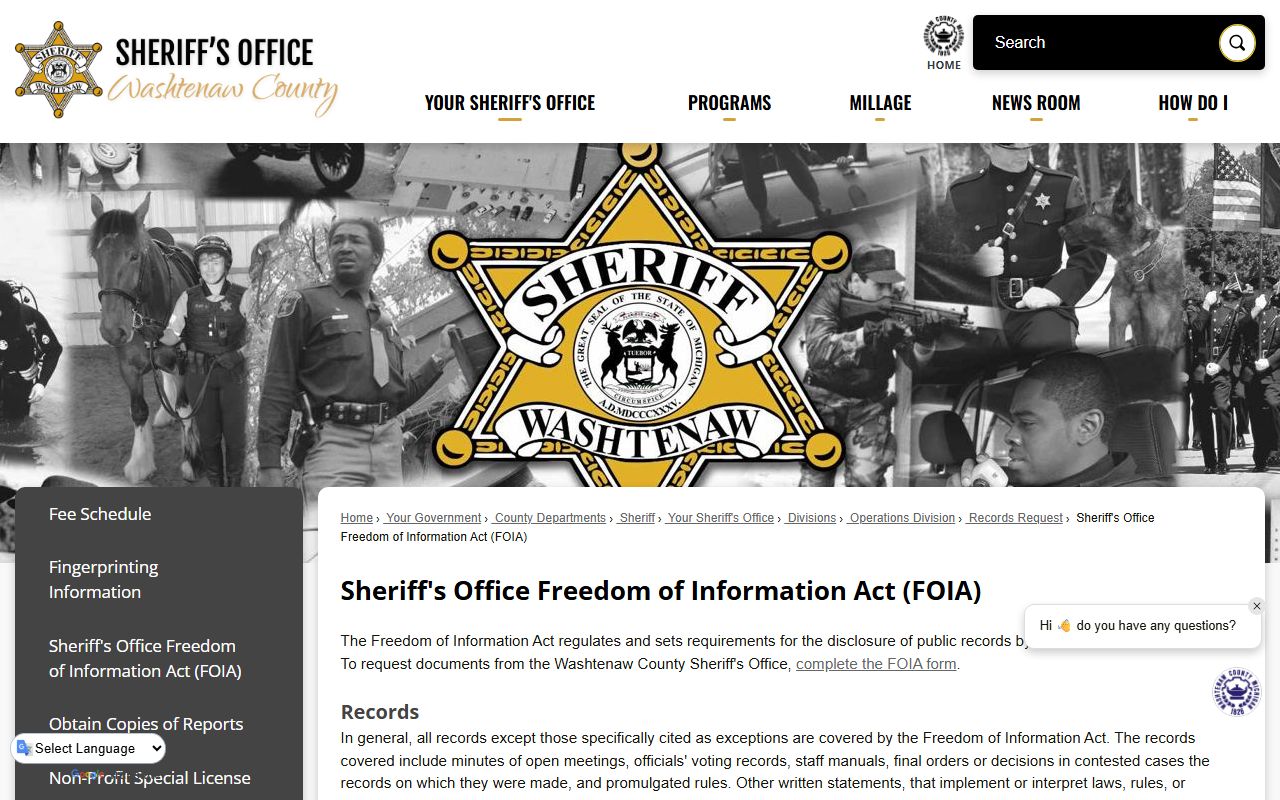
FOIA does not open sealed, juvenile, or actively investigated files, but it does reach many completed arrest and incident reports.
Filing Charges After a Washtenaw County Arrest
The charge record begins when the prosecutor files a charging document. This is the formal paper that tells the court, and the defendant, exactly what offenses are alleged. Michigan uses three main charging documents. Most cases start with a complaint. Felonies are later charged by an Information after the district court finds enough evidence to send the case up. A grand jury indictment is possible but rare in Michigan practice.
| Complaint | Information | Indictment | |
|---|---|---|---|
| Filed By | Officer / Prosecutor | Prosecutor | Grand Jury |
| Common For | Misdemeanors | Many felonies | Serious felonies |
| Starts | The case | The case | The case |
In Washtenaw County, a felony usually starts with a complaint and warrant in one of the district courts. If the judge finds probable cause at the preliminary examination, the case is bound over to the 22nd Circuit Court, where the prosecutor files the Information. The Washtenaw County Prosecuting Attorney, currently Eli Savit, files or authorizes those charges on behalf of the People of the State of Michigan. Michigan counties use the title Prosecuting Attorney, not District Attorney.
Note: A complaint or warrant that begins a case is an accusation only, not a court finding that the person committed the offense.
Charge Codes and Severity Levels
Each charge points to a specific statute, usually a Michigan Compiled Laws citation shown as an MCL number. The citation fixes exactly what offense is alleged. Severity splits into a few levels, and the level decides which court hears the case. One arrest can generate several separate charges, each with its own count number, statute, and status. Reading the counts one by one is the only way to see the full picture.
- Felony: punishable by more than one year; charged by Information in circuit court after bindover.
- Misdemeanor: generally punishable by up to one year; handled in district court.
- Civil infraction: not a crime; typical for most traffic and ordinance violations.
The district courts handle misdemeanors and the early felony steps. Felonies move to the 22nd Circuit Court once a case is bound over. Because a single arrest may mix a felony count with lesser counts, the court a case ends up in depends on the most serious charge.
Charge Status on Washtenaw County Records
Charges rarely stay frozen. As a case moves, the prosecutor may add a count, drop one, or swap a charge for a lesser offense. A judge may dismiss a charge. Reading the status next to each charge tells you where things stand right now, not where they started.
| Status | What It Means |
|---|---|
| Pending | The charge is filed and the case is still open. No plea or verdict yet. |
| Amended / Reduced | The charge was changed or lowered to a less serious offense, often as part of a plea. |
| Dismissed | The court dropped the charge. It may be dismissed with or without prejudice. |
| Nolle Prosequi | The prosecutor formally chose not to pursue the charge. |
| Bound Over | A felony charge was sent from district court to circuit court after a finding of probable cause. |
Washtenaw County spreads its criminal caseload across several courts, so a charge can show one status in a district court and a different one after the case moves up. A count charged in the 14A, 14B, or 15th District Court may be amended before bindover. Once the case reaches the 22nd Circuit Court, the Information can list different counts than the first complaint. Checking the newest entry keeps a Washtenaw County arrest record from looking out of date.
Charges vs. Convictions
Being charged is not the same as being convicted. A charge is an accusation that a person committed an offense. A conviction is the outcome, reached by a guilty plea, a no-contest plea, or a verdict after trial. Between the two sits the whole case. Many charges are reduced, dismissed, or never proven. An arrest record and a charge record can both exist without any conviction ever following.
| Charge | Conviction | |
|---|---|---|
| Stage | Accusation | Verdict or plea |
| Burden of Proof | Probable cause | Beyond reasonable doubt |
| Public Record | Yes | Yes |
Note: A person is presumed innocent until convicted, so a filed charge on a Washtenaw County arrest record does not establish guilt.
Statewide Charge and Criminal History Lookups
County court searches show cases in Washtenaw County, but they do not roll up a person's full statewide history. For that, Michigan runs a name-based public criminal history system through the Michigan State Police. It draws on records reported by courts and agencies across the state. The Michigan State Police criminal history service explains the search, known as ICHAT, and its fees.
Suppressed records, sealed material, and warrant information are not returned through ICHAT. A single county case search and a statewide history check answer different questions. Serious lookups, such as a full record review, often use both together. For sentenced state prisoners, the Michigan Department of Corrections runs a separate offender search that is distinct from any county arrest or charge record.
Restricted Charge Records in Washtenaw County
Not every charge stays visible to the public. Michigan law keeps several categories out of ordinary public view. Juvenile court records are generally not open to the public. A conviction that has been set aside is removed from public criminal history. Charges tied to an open investigation may be withheld until the case resolves. Sealed material and protected personal details, such as dates of birth, are redacted from public search.
Juvenile records fall under MCL 712A.28, which keeps them closed except to those with a legitimate interest or a court order. A person who clears an eligible conviction does so through the set-aside process under MCL 780.621, part of Michigan's Clean Slate framework.
| Dismissed Charge | Set-Aside Conviction | |
|---|---|---|
| Outcome | Charge dropped before conviction | Conviction cleared after the fact |
| Public Visibility | Case may still show as dismissed | Removed from public criminal history |
| Applies To | A charge the court or prosecutor drops | An eligible conviction under Clean Slate law |
Note: A set-aside removes a conviction from public view, but law enforcement and courts may keep access to it for authorized purposes.
Background Check Considerations
Looking up a charge out of personal curiosity is different from running a background check for hiring, housing, or credit. Those regulated uses fall under the federal Fair Credit Reporting Act, which sets rules on accuracy, permission, and how the information may be used. A casual court search does not meet that standard. Anyone making an employment or tenant decision should use a screening company that follows the FCRA.
Important: This site is not a consumer reporting agency under the Fair Credit Reporting Act, and its information cannot be used for employment, tenant, credit, or other FCRA-regulated decisions.